


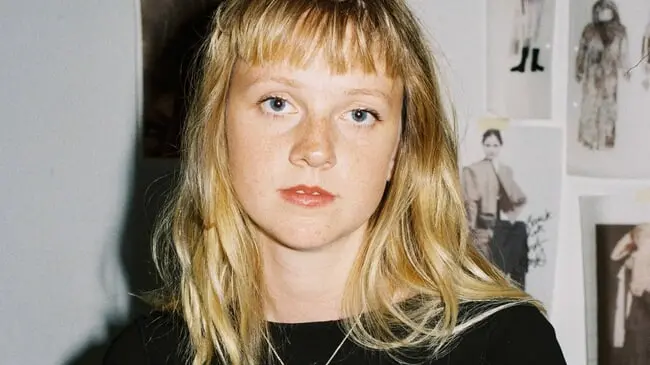
Transdisciplinary artist Zoë Brennan traces the edges of cities and the countryside, intrigued by what can be found in between. She creates socially engaged, site-specific projects that unfold slowly and collaboratively. We talked about how she investigates the ways people inhabit, care for and share spaces. For Zoë, the outcome is never fixed; the process itself reveals unexpected connections, relationships and possibilities.
Can you tell us about what you studied at KASK and why you selected the programme?
I was initially deciding between the Curatorial Studies programme and Autonomous Design. Curatorial felt more institution-focused, more theoretical and more structured. Autonomous felt undefined. But in a good way, because it leans towards an interdisciplinary way of working.
<img class="editorial-image" src="https://cdn.prod.website-files.com/61eebcc683107b99137f4423/69c11d608c1a294ae858f82e_10.avif"/>
I had worked as a theatre scenographer before, and then I moved to Belgium and started doing more collaborative projects. Sometimes they were curatorial, sometimes I was working with my hands on different material, and other times I was working with people who weren’t artists. Autonomous felt like it could hold all of that.
I became interested in ecology not only as a subject of artistic reflection, but as a mode of practice
I think people are sometimes sceptical of the programme because they don’t quite know what it is. But for me, it was about being outward-looking. It’s less about developing yourself in isolation and more about reflecting the world, culture and how people relate to each other and to their environment, which I find interesting.
Your projects reflect on the dynamics between people and spaces. Can you tell us a bit about that in light of your ongoing work passage?
There’s an ongoing interest in how people relate to space and place. I recently redesigned my website, and it was nice to see this thread running through the projects I do. Since every project takes on a different form, it’s sometimes hard to see what they share.
<img class="editorial-image-50-left" src="https://cdn.prod.website-files.com/61eebcc683107b99137f4423/69c11d5d9f8cec2ed6d56609_4.avif"/>
<img class="editorial-image-50-right" src="https://cdn.prod.website-files.com/61eebcc683107b99137f4423/69c11d6063a5ca479efd4368_13.avif"/>
With passage, that became really clear. It started from my master’s thesis, which was initially about rural public space, but became much broader. I was looking at collectives and artists moving to rural areas and starting projects. I became interested in ecology not only as a subject of artistic reflection, but as a mode of practice – a way of organising collectively, living relationally and working within specific rural contexts. At the same time, it opened up a lot of questions about the impact of modernisation, colonisation and industrialisation. I enjoyed the process, but at some point I realised I didn’t really know where I stood in all of it. I’ve always lived in cities, so I started questioning my own relationship to the countryside. Was there something slightly colonial in that fascination?
I’ve stopped thinking in terms of success and failure
That’s when I applied for a development fund through Kunstwerkt to continue the research, this time combining it with fieldwork experience and working together with a graphic designer, Emese Veszely. Instead of exploring in abstract terms, I started following the river that runs through Brussels out into the countryside. Suddenly, I was spending all this time in transit, in these in-between spaces. Not quite urban, not quite rural. Those thresholds, where so-called ‘development’ was visible everywhere, became my focus. It also became more personal. As a foreigner living in Belgium, I’m also between places. Between languages, between landscapes. Following the river became a way to think about that.
<img class="editorial-image-50-left" src="https://cdn.prod.website-files.com/61eebcc683107b99137f4423/69c11d5f5ccc6af5cfefb5c5_3.avif"/>
<img class="editorial-image-50-right" src="https://cdn.prod.website-files.com/61eebcc683107b99137f4423/69c11d5dd2b1d94d3b6d907f_2.avif"/>
So what did you learn from following the river?
It was the first time I really put myself at the centre of a project. Usually, I feel more comfortable creating platforms for others. This felt more intimate. I learned that understanding a landscape takes time. You can’t rush it. You start noticing development, infrastructure, and small shifts in architecture. You begin to notice these funny in-between spaces and understand history differently. And you realise that this process is like a relationship that you have to put a lot of energy into, and that changes with time.
It’s about creating spaces where connection and reflection can happen and providing other people with the agency to express something, rather than forcing big ideas onto them without offering solutions
<img class="editorial-image-50-left" src="https://cdn.prod.website-files.com/61eebcc683107b99137f4423/69c11d5f7313ff3a7dac59dd_7.avif"/>
<img class="editorial-image-50-right" src="https://cdn.prod.website-files.com/61eebcc683107b99137f4423/69c11d5e76b6e564eee64cce_6.avif"/>
Your project <i>Tune in Radio Poort<i/> also centres on people and place, but in a very different way. What drew you to the Brugse Poort neighbourhood and its community?
The starting point was that Brugse Poort (Ghent) has many strong communities, but they don’t always interact. What they share is the area itself. The streets, the public space. Together with my friend, Lennert Janssens, we built a mobile radio station from waste materials we found in the neighbourhood. Just going on walks and collecting things was already a way to start conversations. It was like a big bric-a-brac structure that moved around. Portable, but heavy enough that you needed people to help move it, which was part of its collaborative aspect. We did workshops with children and adults, performances and conversations, and we hosted listening moments.
I don’t know if this project ‘bridges’ communities in a measurable way. Social artistic projects rarely work like that and can be inconclusive. It was hard at times. It changed a lot during the process. But we came into contact with so many people. I’ve stopped thinking in terms of success and failure. It’s more about what the project opens up.
<img class="editorial-image-50-left" src="https://cdn.prod.website-files.com/61eebcc683107b99137f4423/69c11d5fcab3cd9ee601df08_9.avif"/>
<img class="editorial-image-50-right" src="https://cdn.prod.website-files.com/61eebcc683107b99137f4423/69c11d5ff8853d48a4ce3844_12.avif"/>
In times of ecological and social crises, what do you think could be the role of artists?
That’s a big topic. I struggle with the idea that artists can, or should solve problems. I think that's especially difficult in socially engaged art. For me, the process is the work. It’s about creating spaces where connection and reflection can happen and providing other people with the agency to express something, rather than forcing big ideas onto them without offering solutions. I recently talked about this with a friend, and I sometimes wish I were better at humour in my work. I love art that’s simple and funny but still talks about complex things. It can be difficult. How do you make an entrance point that’s accessible without being superficial?
<img class="editorial-image" src="https://cdn.prod.website-files.com/61eebcc683107b99137f4423/69c11d611355c248c84684e4_16.avif"/>
Finally, is there an ongoing question or thread that continues with you today from your time as a student?
I think about building communities outside of structures. Ultimately, the best thing about these kinds of learning environments is that you build a temporary community with groups of people who share similar interests or ideas, and you support each other. How do we genuinely support each other? How do we grow together? How far and to whom does that extend? Those questions feel ongoing.
<div class="editorial-banner"> <div class=“editorial-credits”>@zoe___brennan<br><br>Different Class and KASK & Conservatorium are joining forces on a series of artist portraits featuring their alumni. The school is organising an Open Day for potential new students on 26.04.2026.<br><br>schoolofartsgent.be</div>

Different Class works with the interest of their community at heart.
Our work’s purpose is to foster a solid network for independent artists, those who love them, and those who want to support them. Become a member to contribute to the local Belgian art scene.
Our membership


