


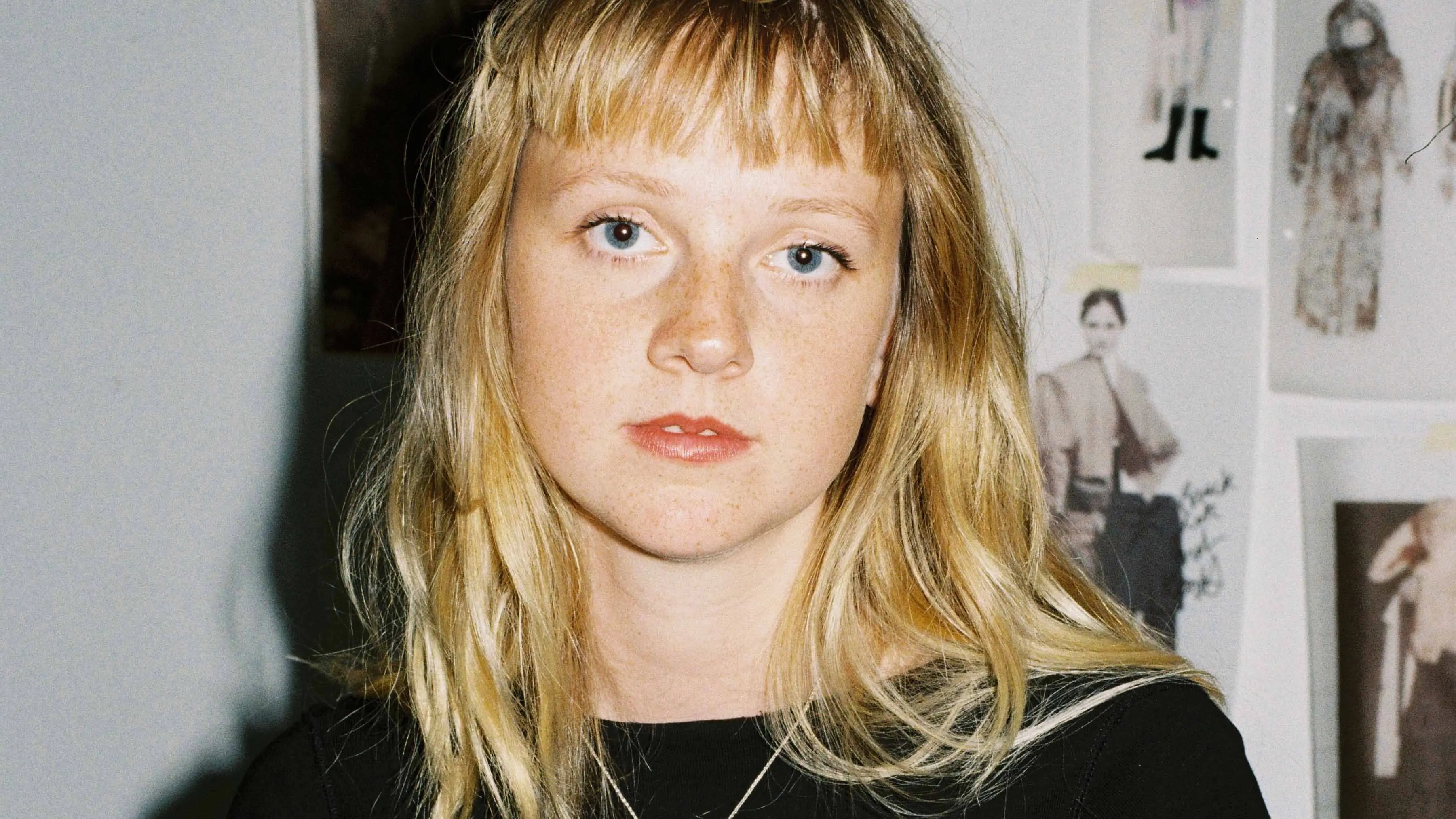


Dorien De Kesel sees clothing as something to look through. Her pieces resist fixed sizing and the idea that garments should dictate who can wear them, leaving space for bodies, memories and lived experiences to shape them. Her practice grew from an activist impulse to challenge fashion’s systems, but has since become quieter and more intimate. For Dorien, clothing is a medium close to people, offering a way to reach them and create lasting connections.
What made you decide to study fashion, and how did your relationship with the medium evolve at KASK?
I was quite young when I started. I was 17, and I wanted to be an activist. I loved what fashion could do with people: the way we all wear clothing and communicate through it, even when we think we don't care about clothing. At that age, I really believed I could change the system through sustainability. I was young and a bit reckless.
I was taking too much energy from myself by always fighting against something
When I started studying, I realised you first need to learn craftsmanship before you can react to the system. At one point, I quit for a year because I was so frustrated. I tried studying textiles, but it felt too slow for me. After taking some time away, I realised fashion was actually the medium I really wanted to work with because it can be so close to people.
At first I was still quite angry and looked at things from a perspective of activism. I made a collection about being a woman in the streets and how masculinity and the male gaze are projected onto us. But I realised I was taking too much energy from myself by always fighting against something. I started looking more towards myself and found that I also get a lot of joy from small things and daily life. The activism became more subtle, which feels much more like me.
<img class="editorial-image-50-left" src="https://cdn.prod.website-files.com/61eebcc683107b99137f4423/6a9eacd8bb51499f86c2e40a_1.avif"/>
<img class="editorial-image-50-right" src="https://cdn.prod.website-files.com/61eebcc683107b99137f4423/6a9eacd8110f46c4e178ef4d_6.avif"/>
Your graduation collection grew from objects, memories and small glimpses of life that you noticed. How did these become clothing?
My last collection started from objects I had collected, from physical things to memories — like cycling and seeing a tree moving in a particular way. I photographed the objects and looked at what attracted me: some inspired me through tactility, others through shape.
I think a lot of my work comes from intuition. I do a lot of research and read a lot of books, but then I need to let that knowledge settle in, and I observe what it does to me. I really believe the archive is in my body. Then I can experiment without being too stuck to the original object. It doesn't need to look like the object; it needs to activate me somehow.
I need to let that knowledge settle in, and I observe what it does to me
The collection is called The soft and lovely silvers are falling from my shoulder, a sentence from a song by Adrianne Lenker. The title also connects to the shoulder in my collection, to silver and to memories around my uncle, who passed away. I liked that the sentence could tell so much without explaining everything. People can discover the collection slowly.
<img class="editorial-image-50-left" src="https://cdn.prod.website-files.com/61eebcc683107b99137f4423/6a9eacd911f99a6df6978c76_19.avif"/>
<img class="editorial-image-50-right" src="https://cdn.prod.website-files.com/61eebcc683107b99137f4423/6a9eacd80ebeaf5581fc864f_16.avif"/>
What makes a collaboration meaningful to you?
I never make my collections completely on my own. I work with textile designers, craftspeople and people from other mediums. I also did an exchange programme in Japan, where I learned a craft. I really like entering a process where I don't know exactly what the result will be.
For me, collaboration means that two people are equal. It's easy to say you're collaborating while one person is actually just telling the other what to do. I want to sit together and find something we have in common, because that's where something new can happen.
I experienced that especially while working with music and film in a project titled The End with Elias Devoldere, Wannes Verspauwen and Pol Plecker. Elias, who did the music, is my cousin. I’ve always admired his work, and we wanted to create something that wasn't simply a song with clothing added to it. We had the music, my collection and the film, and we let them react to each other. Everyone had space to create. What I also liked is that we could comment on each other's work from completely different perspectives.
<img class="editorial-image-50-left" src="https://cdn.prod.website-files.com/61eebcc683107b99137f4423/6a9eacd8bb51499f86c2e43b_11.avif"/>
<img class="editorial-image-50-right" src="https://cdn.prod.website-files.com/61eebcc683107b99137f4423/6a9eacd886a2f66d08caaf1c_15.avif"/>
You have spoken about deconstructing Western standards in fashion. What do you think needs to change?
I think fashion is sometimes stuck in the idea that everything needs to move fast. Something needs to be new, then it's out of season, and suddenly you need something else. We even apply that to ourselves; we constantly feel that we need to renew or improve ourselves.
I also think fashion needs to become more collaborative, not only designers deciding what hip and trendy is. If we really want a more sustainable fashion industry, we need to involve the people who wear the clothes. That's something I struggle with too. I would love to make pieces from my collection that people can buy, but then I have to think about pricing. If I make everything myself and pay myself fairly, some pieces become very expensive. How do we make this possible for everyone? I think that's a question I'll have to actively research for the rest of my practice.
<img class="editorial-image-50-left" src="https://cdn.prod.website-files.com/61eebcc683107b99137f4423/6a9eacd809f95193bf6784ae_13.avif"/>
<img class="editorial-image-50-right" src="https://cdn.prod.website-files.com/61eebcc683107b99137f4423/6a9eacdb300ec5f036923d21_20.avif"/>
What have you noticed gets overlooked in the industry?
The daily things. I had to activate that in myself. Like cycling and looking at a tree and thinking about how beautiful the movement is, or seeing a little napkin my grandmother gave me. We don't always pause and look at these things.
I also find a lot of beauty in clothing that shows how someone has lived in it. A hole can tell you how somebody moves; a coffee stain can tell you something about a person. Instead of hiding these things, I want to highlight them.
A hole can tell you how somebody moves; a coffee stain can tell you something about a person
For example, my uncle died last year, and I received his army jacket. I measured the space between his body and mine, and that became a measurement for pieces in my collection. In that way, the clothes carry something of him.
There are already so many clothes in the world. I don't want to create another shirt just for the sake of creating one. I want to find value in what already exists and give people a relationship with the clothing.
<img class="editorial-image-50-left" src="https://cdn.prod.website-files.com/61eebcc683107b99137f4423/6a9eacd8657900c35b8c6748_17.avif"/>
<img class="editorial-image-50-right" src="https://cdn.prod.website-files.com/61eebcc683107b99137f4423/6a9eacd886a2f66d08caafa6_9.avif"/>
What would you like to explore next?
I want to see if I can make some pieces from my collection in a few more sizes and perhaps sell them this fall. It would be an experiment: can I actually make this work in terms of pricing, and is there a community that believes in it and wants to support it?
I also want to work more with musicians and theatre. My dream is to have a collective under my brand where I can support other people — painters, musicians, filmmakers — and give them a medium to work with. I want my clothing to exist not only in the real world, but also in the fantasy of music and film.
For now, I also want to have some exhibitions because I want people to really see my clothing. I've done a fashion show, but it was too fast. I would like to create a place where people can take the time to actually look at it. And maybe I'll work on a new collection. I'm also open to whatever comes my way.
<div class="editorial-banner"> <div class=“editorial-credits”>@doriendekesel<br><br>Different Class and KASK & Conservatorium are joining forces on a series of artist portraits featuring their alumni.<br><br>schoolofartsgent.be</div>

Different Class works with the interest of their community at heart.
Our work’s purpose is to foster a solid network for independent artists, those who love them, and those who want to support them. Become a member to contribute to the local Belgian art scene.

Our membership


